Why hide money in food?
The peculiar lottery of Christmas pudding coins
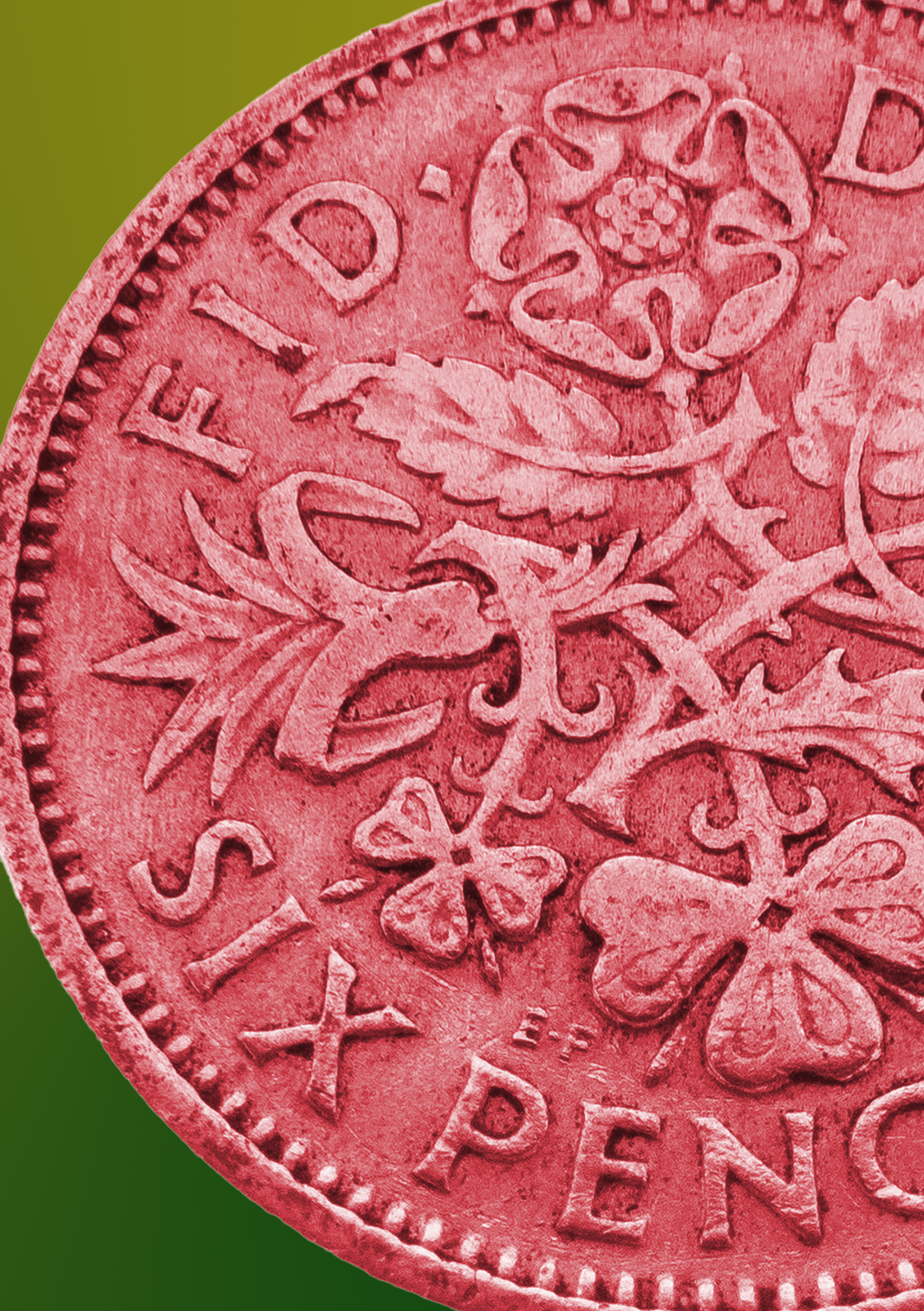
Christmas pudding contains dried fruit, suet, flour, and—if your family follows tradition—a sixpence coin. Or a five-pence piece. Or a charm. Something small, metallic, and inedible, randomly distributed through the pudding mixture.
The person who finds it supposedly receives luck for the coming year. Or wealth. Or gets to make a wish. The exact superstition varies by family, but the mechanism is consistent: random distribution determines who gets the fortune.
This is an inedible lottery with stakes so low that nobody actually cares, but participation rates so high that most families with Christmas pudding traditions include some version of it. You're hiding choking hazards in dessert based on Victorian customs nobody fully remembers.
The original sixpence coins had actual silver content. Finding one meant finding something with minor but real value. Modern substitutes—five-pence pieces, pound coins, plastic charms—have shifted the practice from a treasure hunt to a purely symbolic gesture. You find a coin worth five pence. This doesn't change your year. Everyone knows this. You still feel briefly pleased.
The randomness matters more than the object. If someone just gave you a coin, that wouldn't be interesting. But finding it hidden in your portion of pudding feels like winning something, even though you know the probability (roughly 1/n, where n equals the number of people eating pudding) and the prize value (negligible).
The preparation introduces strategic decisions disguised as randomness. Where you place coins in the mixture affects the distribution. Coins sink. Dense fruit clumps can hide coins. Some cooks place coins deliberately to ensure children find them. Others commit fully to randomness by stirring vigorously after adding coins, letting physics and chance determine outcomes.
Modern health and safety concerns have complicated the tradition. Coins carry bacteria. Young children might actually choke. Some families have switched to silver charms specifically made for pudding—cleaner, safer, less likely to be swallowed. Others wrap coins in greaseproof paper. Some abandon the practice entirely.
This is ritual maintained through momentum rather than meaning. Your grandmother did it. Your mother did it. You do it. Your children will probably do it. Not because it works, but because it's what happens at Christmas.
The randomness provides a momentary focal point during dessert. Someone finds the coin, everyone acknowledges it, there's brief entertainment value, and conversation moves on. It's structured unpredictability—you know someone will find something, you don't know who. That tiny uncertainty is enough to maintain engagement.
So if you bite down on something metallic in your Christmas pudding, you've won the dessert lottery. Your prize is a cleaned coin and imaginary good fortune. The odds were roughly one in eight. The value is essentially zero. You'll still feel like you won something.
Like this story? You'll love randomthebook.com when it's released in March 2026. Pre-order a copy today!